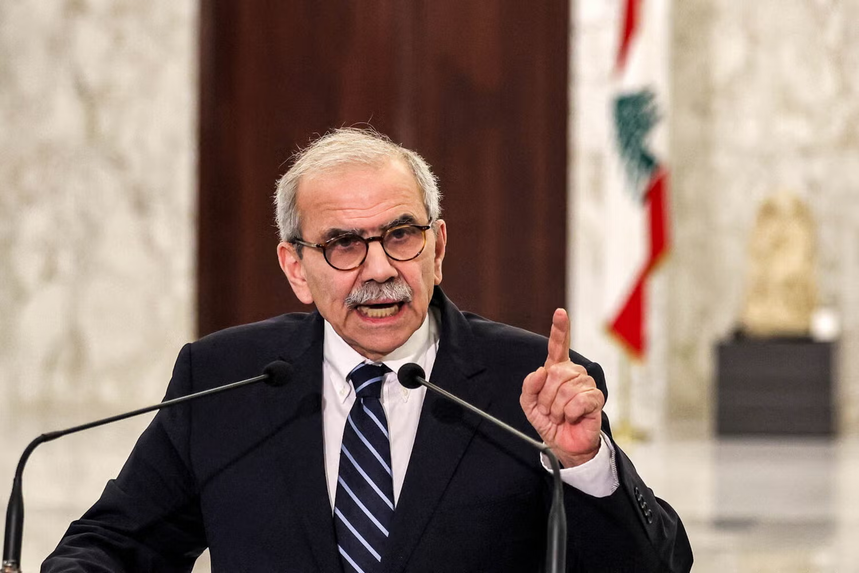
BEIRUT: Lebanese Prime Minister Nawaf Salam warned on Wednesday that the country was still under tension in the south due to the continued Israeli attacks, and that normalization with Israel was not accepted in the country.
In an interview with journalists, Salam stated that there was no Lebanese support to build normalized relations with Israel, as per a statement by the Prime Minister Office.
The state of affairs in the south is concerning, Salam said, citing in particular the intensification that followed a missile strike last week.
He also opposed the insistence of Israel to retain five posts in southern Lebanon claiming that they have no real military or security value but are only used to keep pressure on Lebanon.
The remarks of Salam are made when Beirut is experiencing a new wave of international attempts to stabilize the situation in the border in terms of security. The comments come after Washington is reportedly urging Lebanon to think about a relationship with Israel that would not be formal normalization but would be beyond a traditional ceasefire agreement.
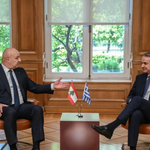
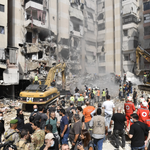
In the reconstruction of Lebanon, Salam reported that a recent meeting with the French envoy Jean-Yves Le Drian was aimed at getting international help in the reconstruction of the conflict-affected areas.
He claimed that Lebanon was liaising with France, the World Bank and other donor nations to raise funds. Salam reports that the World Bank has already provided a reconstruction grant of $250 million and a donor conference is being prepared to raise up to 1 billion dollars.
Hezbollah and State Monopoly of Weapons
Salam also touched on the political aspect of Hezbollah, noting that the group still has a large popular base and political representation but emphasizing that the government believes that weapons should be under state control.
He claimed that the old army, people and resistance formula had been successfully terminated when it was not mentioned in the ministerial statement of the government. The statement rather highlights that the state must be the sole owner of weapons.
The problem is one of the most delicate political and security issues in Lebanon, especially as Beirut tries to consolidate state institutions and deal with the existence of an armed group with a significant political impact.
Ceasefire Under Strain
The remarks are almost two years following the signing of a ceasefire between Israel and Hezbollah on November 27, 2024. Lebanese officials have alleged that Israel has committed hundreds of breaches of the agreement and have repeatedly demanded that the Israeli withdrawal of the southern Lebanon be completed.
According to the ceasefire agreements, Israel was supposed to withdraw fully by February 18, 2025, but Lebanese officials claim that this did not occur.
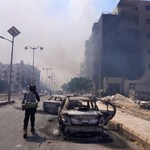
The ongoing presence of Israeli troops, cross-border assaults and security set-ups have exposed the ceasefire to a fresh outbreak of violence.
The recent statements of Salam point to the challenging situation of Beirut: Lebanon is asking the international community to support its reconstruction and increase state control, at the same time, it is under pressure to normalize relations with Israel and is confronted with an unsolved security dilemma in the south.
The problem facing the Lebanese government is thus not merely to sustain the ceasefire, but to establish an environment where reconstruction, state control and long-term border stability can proceed without causing another round of war.