ICRC warns of civilian risks in Libya
(UPI) – Unexploded ordnance and destroyed armoured vehicles are a common part of the landscape during the Libyan conflict, the International Red Cross warned.
Middle Eastern and Western military forces intervened in Libya after the United Nations sanctioned action to protect unarmed civilians from fighters loyal to Muammar Al Qathafi.
Rebel forces backed by a no-fly zone enforced by coalition forces are struggling to hold their ground against well-equipped, pro-Al Qathafi fighters. The International Committee of the Red Cross warned, however, that many of the civilians in Libya are threatened by weapon contamination.
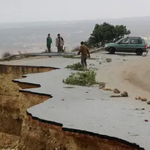
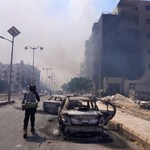
Srdjan Jovanovic, an ICRC weapon contamination specialist, said much of the countryside in Libya is strewn with unexploded munitions and wrecked military vehicles.
“Unexploded ordnance and destroyed armoured vehicles are now very much part of the landscape,” he said in a statement. “The risk for the civilian population is clear, especially as there are many conflict zones in the country.”
The ICRC said the Libyan borders with Egypt, Chad and Tunisia are littered with mines and unexploded munitions dating to the 1970s. Ongoing use of land mines is an unconfirmed threat, the aid agency noted.
“Everyone living in areas affected by fighting should be aware of the risk posed by explosive remnants of war,” added Jovanovic.
After a Grumble, NATO Apologises for Airstrike
(N.Y. Times) – NATO acknowledged on Friday that its warplanes had hit a rebel convoy the day before, killing of at least four people, and after some confusion eventually apologised for the accident.
At a news conference in Naples, where NATO has its operational headquarters, Rear Adm. Russell Harding, the British deputy commander of the air campaign, said the alliance had not been forewarned – as the rebels’ commander, Gen. Abdul Fattah Younis, contended on Thursday – that the rebels were using tanks at the time the attack took place.
The military movements in the area where the attack took place were also “very fluid” at the time, he said, according to news reports, with vehicles going backward and forward.
“I am not apologising,” he said of the incident, the second case of friendly-fire deaths in a week. “The situation on the ground was extremely fluid and remains extremely fluid, and until yesterday we did not have information” that the rebels planned to deploy tanks.
But later the secretary general of NATO, Anders Fogh Rasmussen, expressed his remorse over the mix-up. “This is a very unfortunate incident,” he said at NATO headquarters in Brussels. “And I strongly regret the loss of life.”
Admiral Harding said that, in the past 48 hours, NATO warplanes had flown 318 sorties and struck 23 targets in several parts of Libya.
That brought the total since the alliance assumed overall command of the operation from the United States last week to more than 1,500 sorties, striking antiaircraft missile defences, tanks, munitions dumps and loyalist forces seeking to advance into Misurata, he said.
Rebels in the hotly contested area between Brega and Ajdabiyah in eastern Libya said they would paint the tops of their vehicles pink to help avoid future friendly-fire accidents.
As the conflict has evolved, however, the of Col. Muammar Al Qathafi have proven adept at mixing in with civilian populations and mimicking the rebels’ vehicles, to sow confusion on the battlefield and deter allied airstrikes.
Despite the contention by General Younis that his fighters had managed to recover from the NATO attack and regain ground, at around 2:45 p.m. on Friday, a rebel-held checkpoint on the western edge of Ajdabiyah was shelled by Al Qathafi forces, suggesting they were still within striking distance of the city.
On Thursday, General Younis said he was still waiting for an apology from NATO. “It is not possible to make a mistake with 20 tanks advancing on a large patch of desert land,” he said. “We hope that such a mistake will not be repeated.”
He did not say how many tanks were destroyed, but a tank driver in the convoy said eight were damaged or destroyed.
Later in the day, artillery or rocket fire near the strategic city of Ajdabiyah sent hundreds of cars fleeing the city in a panic north toward the relative safety of Benghazi. Doctors in Ajdabiyah and Benghazi said the dead included a doctor who was in an ambulance near the scene of the air attack.
The episode served to underscore the lack of coordination between the Western alliance and the Libyan rebels during a war in which both sides drive similar vehicles as the front lines shift rapidly.
The strike, against 17 rebel tanks making their debut on the battlefield, was a particularly untimely setback for a campaign that had lost momentum in the past week and has withered before the pro-Al Qathafi forces’ overwhelming advantage in equipment and heavy weapons.
On Thursday, General Younis said that trainers from Qatar were teaching rebel fighters how to use antitank weapons.
The rebels have been hinting for several days that they would soon unveil a surprise at the front. Survivors of the attack said their convoy included equipment confiscated from Colonel Al Qathafi’s military that in recent weeks had been refurbished and made road-worthy.
They said it was being brought forward for a fresh attack against the oil town of Brega, which fell to the loyalists this week.
The convoy included T-55 and T-72 tanks, according to General Younis, who said that the rebels gave NATO frequent updates throughout the day on Thursday about the position of the convoy, which included buses and armoured vehicles.
Shortly before the attack, about 30 miles southwest of Ajdabiyah, the convoy stopped on the side of the road, said Alsounese Fazan, who was driving a jeep with the convoy. Mr. Fazan, who was being treated for minor injuries at Al Jalaa hospital in Benghazi, said the rebels heard the sound of what they thought were NATO aircraft in the morning.
“We shouted ‘God is great!’ and after that we heard nothing,” he said. “And then they bombed us.” He said that he saw four separate explosions, one of which was about 100 yards away.
Another wounded fighter, Amin Jaman, 32, said that all of the vehicles in the convoy were flying the bright, tricolour Libyan rebel flag. He said that he was standing on top of a stationary tank and never heard the sound of an airplane when the first ordnance exploded nearby.
This would be the second time in less than a week that NATO warplanes struck a rebel target. On Saturday, Western warplanes killed 13 rebels in the same region of eastern Libya, where the rebels have been fighting a seesaw battle for weeks with the better equipped and trained forces of Colonel Al Qathafi.
That first mistake was brushed off by the rebels, but this one set off outrage among the troops, with some fighters shouting “Down With NATO” along the road from Brega to Ajdabiyah , The Associated Press reported.
NATO has also been criticized by rebel leaders for what they say is its failure to keep up the pace of attacks on the loyalist forces that was established in the first two weeks of the conflict. NATO officials have rejected the criticism, saying that the alliance was flying more missions every day.
Ambulances near the scene rushed many of the wounded to the hospital in Ajdabiyah , and then returned to the area of the front lines to retrieve more people. A doctor, Salah al-Awami, who drove in one of the ambulances, stopped to ask rebels where to find other wounded people, according to a colleague who was travelling with him, Dr. Ahmed Abdulrahman Zwei.
At that moment, he said, an explosion in the desert nearby blew out the windows of the ambulance, and fatally wounded Dr. Awami.
“The shrapnel came from the desert and passed right through the vehicle,” Dr. Zwei said.
It was not immediately clear whether that blast was caused by an airstrike or an unrelated attack.
At times during the past week, fire from the Al Qathafi forces has reached the area where the ambulance was struck.
Two witnesses said they suspected that the ambulance might have been hit by reckless rebel fire. A contingent of rebels, known as the Darnah Brigade, has for several days been firing 57-millimetre air-to-ground rockets from the back of pickup trucks.
The rockets, carried in pods removed from confiscated government attack helicopters, fly wildly, and the brigade often fired them uselessly into the desert.
Witnesses said the brigade was firing its rockets again in the vicinity of the convoy, at no apparent targets, and might have struck the ambulance with errant fire. General Younis said that after the airstrikes, Colonel Al Qathafi’s forces attacked the rebels from three directions, forcing a retreat toward Ajdabiyah.
Rebel fighters said that later in the afternoon, a half-dozen rockets or other munitions exploded at the western edge of the city. The explosions caused a mass panic, as civilians and rebels, including some with heavy weapons, briefly packed the highway north to Benghazi.
General Younis said that by Thursday night, the rebels had regained some of the ground they had lost, retaking “large sections” of the road toward Brega.
In Tripoli, a government spokesman said NATO airstrikes hit at least three military academies in the vicinity of the capital. The spokesman, Mousa Ibrahim, said NATO had stepped up its attacks around the country, apparently in response to the rebel leaders’ criticism.
“It seems they felt sorry for these guys crying on TV and they had a wave of attacks,” Mr. Ibrahim said, adding that he thought NATO attacked during the day “to maximize the terror.”
Houston Oil Lobbyists Paid for Former Congressman’s Libya Mission
(N.Y. Times) – A private diplomatic mission to Libya by a former U.S. congressman, who wanted to meet Col. Muammar Al Qathafi and convince him to step aside, was paid for by two Houston businessmen whose firm brokers oil and gas deals in unstable countries.
The former congressman, Curt Weldon, who left Libya on Friday, after he failed to secure a meeting with Colonel Al Qathafi and had to settle for talks with one of his sons, Saadi, told CNN on Thursday night his trip “was paid for by the team of Steve Payne and Brian Ettinger of Houston.”
In a statement sent to The Lede on Friday from Tripoli, the Libyan capital, Mr. Payne and Mr. Ettinger, who have worked at the nexus of international relations and the energy industry for many years, confirmed that they had paid Mr. Weldon’s travel expenses and accompanied him on his trip.
The statement added that while Mr. Payne “has deep and wide contacts in Libya, and has a long term relationship with three of the sons of Muammar Al Qathafi,” the two men “have no current business in Libya or with the Al Qathafi family.”
But Mr. Payne and Mr. Ettinger once boasted that Libya was a part of the world where their firm, Worldwide Strategic Energy, had “influence.”
A confidential document describing the firm’s accomplishments, obtained and posted online by the Website Talking Points Memo in 2008, told potential investors that Worldwide Strategic Energy had “been engaged in Libya since 2005, holding multiple meetings in London, Geneva, Moscow and Tripoli with key oil ministry officials, as well as with Seif Al Qathafi, president of the Al Qathafi Foundation for Development and son of the leader Muammar Al Qathafi.”
In a description of his plan for ending the conflict in Libya published on The New York Times Op-Ed Page on Wednesday, Mr. Weldon wrote that “Colonel Al Qathafi’s son Seif, a powerful businessman and politician, could play a constructive role as a member of the committee to devise a new government structure or Constitution.”
Speaking to CNN on Thursday night, the former congressman suggested that Seif Al Qathafi “should be given the opportunity to seek office where he can run against other candidates, perhaps, for the presidency,” if Colonel Al Qathafi would agree to stand aside and allow elections to take place.
As my colleague David Kirkpatrick reported from Tripoli earlier this week, some Libyan officials said that part of the Al Qathafi family has endorsed “a resolution to the Libyan conflict that would entail pushing their father aside to make way for a transition to a constitutional democracy under the direction of his son Seif al-Islam Al Qathafi.” The officials said that Saadi Al Qathafi supports that plan.
According to the statement by Mr. Payne and Mr. Ettinger, Saadi Al Qathafi was involved in the planning for the visit by Mr. Weldon’s delegation.
Earlier this week, Saadi Al Qathafi also took an interest in the case of Eman al-Obeidi the Libyan woman who told foreign journalists last month that she had been gang-raped by 15 members of Colonel Al Qathafi’s security forces.
Over the objections of Libyan information ministry officials, the Libyan leader’s son met with Ms. Obeidi on Wednesday and allowed her to be interviewed by CNN.
A press release sent to reporters on Friday by Mr. Weldon’s delegation gave Mr. Payne credit for arranging the meeting between Saadi Al Qathafi and Ms. Obeidi. The statement also revealed that Mr. Weldon had tried and failed to secure passage for Ms. Obeidi to eastern Libya during his visit.
In addition to their work in the energy sector, Mr. Payne and Mr. Ettinger also broker contacts between foreign governments and American officials, through another of their firms, Worldwide Strategic Partners.
Both men have close ties to senior American politicians. Mr. Ettinger worked for Joe Biden, the current vice president, during his time in the Senate.
In 2008, Mr. Payne was caught on tape during an investigation by The Times of London apparently suggesting that he could arrange a meeting with Vice President Dick Cheney for an exiled Kyrgyz politician in return for a donation of “a couple of hundred thousands of dollars” to the George W. Bush Presidential Library.
In addition to releasing a secretly filmed tape of Mr. Payne discussing the meetings with Bush administration officials that he said his firm could set up, the British newspaper also published a slide show featuring snapshots of Mr. Payne clearing brush with Mr. Bush and shooting with Mr. Cheney, and this brochure discussing the work of Worldwide Strategic Partners on behalf of clients like the governments of Pakistan and Azerbaijan.
Libya rebels paint vehicles to avoid friendly fire
(Reuters) – Libyan rebels painted the roofs of their vehicles bright pink on Friday to avoid more friendly fire casualties after a NATO air strike they said killed five fighters.
The strike hit a rebel tank column as it advanced on the disputed oil port of Brega on Thursday, causing a confused insurgent retreat back from Ajdabiyah , gateway to the uprising’s stronghold in Benghazi.
NATO, which is enforcing a no-fly zone in Libya aimed at protecting civilians, on Friday acknowledged that its planes were probably responsible for the friendly fire incident, the second in a week. Officials apologised for the error.
Rebels heading west from Ajdabiyah toward the front against forces loyal to Muammar Al Qathafi said the peach paint on their vehicle roofs was to avoid more friendly fire.
Rebels were still angry and jittery on Friday about the accident and scattered quickly when a volley of artillery shells from Al Qathafi forces thumped around the western gate to Ajdabiyah in the afternoon.
The desultory war along the eastern front maintained its pattern of sporadic advances to and from the contested oil port of Brega.
Ahmed Ignashy, a doctor at Ajdabiyah hospital, said about six rebels were wounded in skirmishes 20 kms (12 miles) west along the Mediterranean coast road.
He expressed the despondency in rebel ranks and impatience that NATO airpower has not been decisive.
“I don’t know what is happening, really. NATO struck us yesterday and today tanks from the Al Qathafi forces. Where is NATO?”
Bloody Truck
A pick-up truck full of men with AK-47 assault rifles sped into the hospital, carrying a wounded man they said had been hit about 18 km west of the town.
The bed of the pick-up truck was filled with blood-stained ammunition and bandages.
Another NATO strike last week killed 13 rebels, including ambulance staff, on the outskirts of Brega.
“Twice they’ve hit us by accident now,” grumbled Belgassim Awamy, a rebel volunteer near the western entrance of Ajdabiyah .
“NATO is an alliance against the Libyan people,” said Alaa Senudry, another rebel standing nearby.
NATO says Al Qathafi forces are sheltering near civilian areas, making it difficult to hit them effectively from the air.
Some rebels insisted Al Qathafi aircraft had staged Thursday’s attack, despite the fact that his air force has been grounded by the NATO planes.
“That was Muammar, it came from the south,” said Wanis Boumarie, a former policeman turned rebel volunteer, when another rebel blamed the attack on NATO.
“NATO is extremely slow,” he said, suggesting Al Qathafi warplanes might have evaded the no-fly zone.
NATO has repeatedly denied rebel accusations that the pace of air strikes has reduced since the alliance took over from a coalition of the United States, France and Britain on March 31.
Libyan rebels bide their time
(L.A. Times) – A long standoff could allow the rebels to gain strength, perhaps with help from foreign advisors.
Here in Muammar Al Qathafi’s capital, embassies continue to close down. Gas lines get longer. Fear and uncertainty grow. Spring has arrived, but there are no short-sleeve shirts for sale at the market because supply lines to Tripoli are cut.
Across the country in eastern Libya, the rebel government is gaining international recognition. New groups of diplomats arrive daily in Benghazi, the rebels’ de facto capital. The rebels have begun taking steps to provide logistical support to allies in other parts of the country.
With neither side able to overpower the other militarily or meet the other’s minimum conditions for negotiations, the Libyan conflict is becoming a drawn-out affair.
Although experts are divided, time might be on the rebels’ side.
A protracted struggle “could change the minds of those within the regime who might then view Al Qathafi as more of the problem than the solution,” said retired British army Brig. Benjamin Barry, a senior fellow for land forces at the International Institute for Strategic Studies in London.
“It might allow deployment of trainers and advisors to assist the rebels in better coordinating their efforts,” he said. “If this went on for months and months, then equipping the rebels could make a difference.”
Some argue just the opposite, that time could work against the rebels.
“The truth is, time isn’t on anybody’s side yet,” said Anthony H. Cordesman, an analyst at the Center for Strategic and International Studies in Washington. “If Al Qathafi can prevent the east from getting oil, he can consolidate power and outwait the rebels.”
Over time, the world might lose its enthusiasm for challenging Al Qathafi. “Interest flags, support flags and you don’t get the military backing,” Cordesman said.
Time so far has helped the rebel government regain its footing on the battlefield, thanks to NATO airstrikes launched under auspices of a U.N. resolution, and in part to what American and European officials have said are the efforts of clandestine Western trainers..
France and Italy’s decision to recognize the interim government in Benghazi clears the way for possible weapons exports without violating U.N. sanctions on Al Qathafi’s regime.
Time may also help the rebels politically. Strengthening democratic experiments in neighbouring Tunisia and Egypt, both sympathetic to the rebels’ cause and long suspicious of Al Qathafi, could play a significant role in helping topple a regime that stands out as an anomaly in a region gripped by zeal for democratic reforms.
“If Al Qathafi stays … he will blow up Tunisia and Egypt, and will send mercenaries and booby-trapped cars,” former Foreign Minister Abdul-Rahman Shalgam, an opposition supporter, told the Arabic daily newspaper Al Hayat this week. “He views them as the cause” of his troubles.
This week, just days after newly appointed Foreign Minister Abdelati al-Obeidi visited Greece, Athens shut down its embassy in Tripoli and handed its interests to the staff of the Hungarian mission.
A day after Obeidi travelled to Turkey, that country’s foreign minister met with a leading representative of the Libyan opposition, Mahmoud Jibril.
Malta, the third country on al-Obeidi’s itinerary, recently barred an oil tanker bearing its flag from arriving in Tripoli.
A months-long standoff might work against the people of Misurata, a rebel-held port city of 500,000.
Misurata is under ferocious artillery barrages by Al Qathafi’s military, which appears anxious to crush the resistance there the same way it defeated opponents in the western city of Zawiyah.
Rebel leaders on Wednesday lambasted the North Atlantic Treaty Organisation, saying it failed to prevent a humanitarian disaster in Misurata.
But even there, time might help rebels establish a supply chain. Over the last two weeks, at least two ships dispatched by rebels in Benghazi docked in Misurata, bringing needed medical supplies. They also delivered weapons, several contacts in the city said.
The embattled regime’s forces have been unable to blockade the city by sea.
Ships appear to be arriving at an accelerating pace, with a Turkish medical ship and a team from Doctors Without Borders also reaching the city. Over the last week, rebels in Misurata have hosted journalists who arrived by sea. A few days ago, they launched their own YouTube channel.
And despite its apparent vitality on the battlefield, Al Qathafi’s regime must contend with tight U.N. sanctions that have begun to strangle its economy and prevent it from rearming.
“I believe that this is his last dance; it is the dance of the slain,” Shalgam told Al Hayat. “The areas under Al Qathafi’s control are running out of fuel. Food supplies in areas under his control are running out.”
The Tripoli government appears to be gearing up for a multifaceted fight. On Wednesday it announced the imminent launch of an English-language satellite news channel to promote its contention that it is the victim of a conspiracy involving President Obama and French President Nicolas Sarkozy working in collusion with Arab-language news channels and Al Qaeda.
Shalgam suggested that the regime may be miscalculating that time is on its side. But Cordesman said rebels should also be wary of assuming that they’ll become a more robust fighting force as time goes on.
“Translating a group of inexperienced fighters into a force to be reckoned with is going to take more than time and influence, and it’s not clear that’s going to happen,” he said. “You cannot add automatic rifles and get instant battalions.”
Rebels repel assault on Misurata, five dead
(Reuters) – Libyan rebels said on Friday they had repulsed a government assault on the besieged western port city of Misurata and a resident said five people were killed in the fighting.
Prospects faded that Libyan leader Muammar Al Qathafi would be ousted by the armed revolt and NATO leaders acknowledged the limits of their air power, which has caused rather than broken a military stalemate.
Alliance officials expressed frustration that Al Qathafi’s tactics of sheltering his armour in civilian areas had reduced the effects of air supremacy and apologized for a “friendly fire” incident on Thursday in which rebels said five fighters were killed.
Misurata, a lone major rebel outpost in the west of the country, has been under siege by Al Qathafi’s forces for weeks. On Friday, insurgents said they had pushed back an assault on the eastern flank of the coastal city after fierce street battles.
A rebel spokesman said government troops had advanced on the heavily populated Esqeer district in an effort to loosen the rebels’ grip on Misurata, where families are crammed together in the few remaining safe districts.
“The attack from the east has been repelled now and the (pro-Al Qathafi) forces have been pushed back,” rebel spokesman Hassan al-Misrati told Reuters by telephone.
A Misurata resident called Ghassan told Reuters: “Medics at the hospital told us that five people were killed today and 10 others were wounded. We were at the hospital and we talked to medics.”
Also speaking by phone, he said he could still hear clashes in the town. “We can still hear mortar fire in the distance.”
NATO air strikes hit weapons depots belonging to Al Qathafi’s forces near the town of Zintan on Friday, a resident said.
“The depots are situated 15 km southeast of Zintan. We could see buildings on fire in the distance,” the resident, called Abdulrahman, said by phone.
Desultory Stalemate
The only active front in the war, along the Mediterranean coast around the eastern towns of Brega and Ajdabiyah , has descended into a desultory stalemate with both sides making advances and then retreating behind secure lines.
On Friday, rebels at the western boundary of Ajdabiyah , still jittery after the friendly fire accident, fled from an artillery bombardment but there was no sign of a government advance.
Ahmed Ignashy, a doctor at Ajdabiyah hospital, said about six rebels were wounded in skirmishes 20 km (12 miles) west.
The head of U.S. Africa Command, General Carter Ham, said the conflict was entering stalemate and it was unlikely the rebels would be able to fight their way into Tripoli.
Early hopes that air attacks on Al Qathafi forces would tip the balance in favour of the rebels had evaporated and Western leaders were emphasizing a political solution.
NATO Secretary-General Anders Fogh Rasmussen took a similar line to Ham on Friday. “There is no military solution only. We need a political solution,” he told Al Jazeera television.
NATO spokeswoman Oana Lungescu spoke of the difficulties facing alliance pilots because of Al Qathafi’s tactics.
“The fact is they are using human shields and parking tanks next to mosques and schools so it is very hard to pinpoint any military hardware without causing civilian casualties,” she said.
Possible Division
Political analysts predicted an extended conflict leading toward possible division of the country between east and west.
“The opposition forces are insufficient to break this deadlock and so as things stand the march on Tripoli is not going to happen,” said John Marks, chairman of Britain’s Cross Border Information consultancy.
“This standoff looks like it could go on pretty much forever … for now we have a stalemate so we are looking rather more at a de facto partition.”
Geoff Porter of North Africa Risk Consulting agreed. “It is increasingly unlikely that the rebels will get anywhere close to Tripoli,” he said.
The confusion on the desert battlefield has caused friendly fire incidents, increasing anger among the rebels, who said they lost five men on Thursday when NATO planes bombed a column of 20 tanks brought out of storage to bolster the eastern front.
It was the second time in less than a week that rebels had blamed NATO for bombing their comrades by mistake after 13 were killed in an air strike not far from the same spot on Saturday.
Misurata, Libya’s third city, rose up with other towns against Al Qathafi in mid-February and has been under siege for weeks after a crackdown put an end to most protests in the west.
Rebels say people in Misurata are crammed five families to a house in the few safe districts, to escape weeks of sniper, mortar and rocket fire. There are severe shortages of food, water and medical supplies and hospitals are overflowing.
The insurgents have used containers filled with sand and stone to block roads and break supply lines to Al Qathafi forces including snipers in Misurata, the rebel spokesman said.
They destroyed lower levels of a multi-storey building, stranding dozen of government snipers.
Come clean on oil, HRW tells Libya
(UPI) – The transitional opposition authority in Libya should open its books on any oil revenue it receives from regional consumers, Human Rights Watch said.
The rebel-backed transitional council in Libya announced April 1 that it struck a deal with Qatar for oil exports. Meanwhile, an oil tanker with a 1 million-barrel capacity arrived in eastern Libya to take on the first crude oil shipments since the conflict erupted in late February.
Human Rights Watch said the Libyan people have a right to know about transactions in the energy sector despite the fight for control in the country.
Arvind Ganesan, a business and human rights director at the watchdog group, said in a statement that the transitional council should comply with international transparency standards for sales of crude oil and natural gas.
“Any emerging Libyan authority should break with past practice in Libya and open the books on oil and gas transactions,” he said. “Failure to do so could lead to continued mismanagement and corruption.”
Human Rights Watch called on the transitional authority in eastern Libya to provide full documentation of all future oil and gas transactions.
Oil prices are at post-recession highs in part because of declines in Libyan oil production. Libya before the conflict was one of the top oil exporters in Africa.
NATO chief ‘regrets’ Libyan rebels’ deaths
(Deutsche Welle) – NATO chief Anders Fogh Rasmussen has said he ‘regrets’ the deaths of Libyan rebels killed in an alliance airstrike. His comments came just after a NATO commander refused to apologize for the incident.
NATO Secretary General Anders Fogh Rasmussen on Friday expressed “regret” over the deaths of Libyan rebels, killed in an alliance airstrike on Thursday.
“This is a very unfortunate incident. I strongly regret the loss of life,” he said in a statement broadcast on NATO’s online TV channel.
His comments came just hours after NATO’s deputy commander of Libya operations refused to apologize for the incident.
“The situation on the ground was extremely fluid and remains extremely fluid. Up until yesterday we had no information that TNC (Transitional National Council) or opposition forces were using tanks,” British Rear Admiral Russell Harding told reporters.
At least five Libyan rebels were killed and several others wounded when NATO fighter planes bombed a rebel tank column near the eastern port city of Brega.
The latest incident comes after NATO strikes killed nine rebels and four civilians in the same area last week, with the alliance saying the bombing was an “unfortunate incident.”
At the same time, the rebels have accused NATO of being too slow to order airstrikes that they have come to depend on in their uprising to end more than four decades of rule by leader Muammar Al Qathafi.
A Stalemate
A top US general maintained Thursday it was unlikely that Libyan rebel forces could oust Al Qathafi, saying the conflict appeared to be turning into a stalemate.
General Carter Ham, who led the first stage of the coalition air campaign in Libya, said the international bombing raids had succeeded in protecting civilians for the most part but that Al Qathafi’s regime probably would not be removed by military means.
Asked at a Senate hearing about the chances that the opposition could “fight their way” to Tripoli and replace Al Qathafi, Ham said: “Sir, I would assess that as a low likelihood.”
And when pressed by Senator John McCain whether the situation was an “emerging stalemate,” Ham said: “Senator, I would agree with that at present on the ground.”
His comments underscored growing concern in Washington and European capitals that the fight in Libya could be deadlocked, with Al Qathafi firmly in control in Tripoli and badly-organized rebels unable to turn the tide even under the cover of NATO-led air power.
German Support
In Germany, Foreign Minister Guido Westerwelle announced his country was prepared to participate in a possible European Union humanitarian mission to Libya.
He said if the United Nations asked Germany for assistance it would not flinch from its responsibility. This would cover medical and military-logistical support to protect refugee transport operations.
Philipp Missfelder, the foreign policy spokesman for the parliamentary group of Chancellor Angela Merkel’s Christian Democratic Union (CDU), said Germany had “a moral obligation” to partake in a humanitarian mission in Libya.
The German lower house of parliament, the Bundestag, would have to approve the Bundeswehr mission.
Last month, EU foreign ministers agreed to launch a humanitarian mission if asked to by the UN.
Germany Says Its Troops Would Join an Aid Mission to Libya
(N.Y. Times) – After breaking ranks with its allies by refusing last month to support the United Nations Security Council resolution authorising military action in Libya, Germany is now prepared to let its troops take part if the United Nations asks the European Union to help provide humanitarian aid to Libyan civilians.
The policy shift, announced by Foreign Minister Guido Westerwelle on Thursday night, reflects Germany’s disarray in its strategy and an awareness that its standing among its allies was damaged when Mr. Westerwelle told Germany’s ambassador to the United Nations to abstain from the vote on the resolution.
Germany later withdrew ships from NATO command in the Mediterranean because Mr. Westerwelle did not want the country’s forces caught up in fighting.
The decisions were viewed with immense disappointment by the United States and other NATO allies and criticized by leading conservative lawmakers belonging to Chancellor Angela Merkel’s Christian Democratic Union party.
And while German opposition parties supported Mr. Westerwelle’s decision not to involve any troops in the Libyan military operation, there were also many dissenting voices among their ranks.
Some lawmakers said that Germany’s decision to abstain on the resolution was short-sighted, damaging trans-Atlantic relations and costing Germany influence and status just when it had joined the Security Council for a two-year term.
Analysts said the decision to take part in a European Union humanitarian mission was clearly an effort to mend some fences.
“Germany felt the sting of isolation after the U.N. and NATO decision,” Henning Riecke, security expert at the German Council on Foreign Relations in Berlin, said. “By supporting the E.U.’s humanitarian mission, it could allow Germany back into the fold and have some influence, at least on the European level.”
The foreign ministry on Friday played down the notion of any change in policy.
“We always said we would provide humanitarian support,” said a ministry official who discussed the situation on condition of anonymity.
European Union members agreed last week to back a military mission in support of humanitarian aid efforts in Libya. The mission, if requested by the United Nations, would involve protection for the movement and evacuation of refugees and for aid agencies.
The force would be composed of the union’s so-called battle groups, which have rarely been used. The operational headquarters would be in Rome and the commander would be an Italian admiral, Claudio Gaudiosi.
Germany has 990 troops in one of the union’s two battle groups.