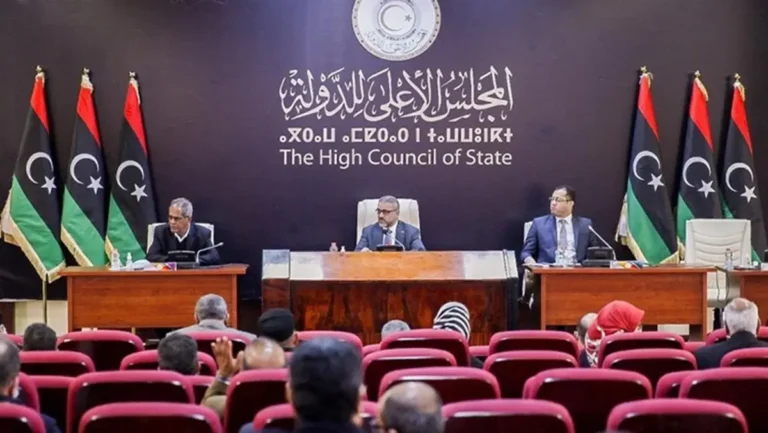
TRIPOLI: Libya’s High Council of State has refuted UN envoy Hanna Tetteh’s description of its stance on the proposed “4+4” agreement, saying her description does not reflect the official position of the council on the political understandings being discussed.
The dispute coincides with ongoing wrangling among Libyan political bodies over the implementation of the proposed deal, which reflects the ongoing tensions over the country’s political trajectory and the means to move forward on the stalled transition.
The High Council of State believes that the role of Libyan institutions should be properly reflected and respected in the political frameworks. It has also emphasized the importance of reaching a true consensus on the controversial issues to open the door to a comprehensive solution to the crisis.
Read More: White House Press Secretary Katie Zacharia is questioned about legal qualifications
The disagreement highlights a wider problem with the United Nations Support Mission in Libya: the need to agree not just on the goals of the political process, but on how the various institutions and factions will get there.
The “4+4” is part of broader negotiations on political understandings among key Libyan actors. But the differences in the implementation of it show the challenges of negotiating to an agreed framework that can garner enough institutional support.
The debate also coincides with ongoing disagreements about the modalities needed to conduct elections and bring together Libya’s fractured state institutions. If these questions are not agreed, the political process may be stalled by debates about representation, authority and the legitimacy of decisions that are proposed.
The new dispute is a diplomatic problem for the UN mission. Its work to help achieve a political settlement relies on its ability to keep the confidence of the parties in Libya, and to ensure that the negotiations result in tangible measures to overcome the institutional divide.
The question is no longer just whether Libyan factions can reach political understandings, but whether those understandings can be broadly accepted and turned into an enforceable roadmap. While disagreements about the description of an institution’s position may seem like a procedural matter, they can reveal underlying disagreements about political representation and the conditions under which a settlement should be made.
Diplomatic efforts, however, could lead to more rounds of talks without addressing the differences that have kept Libya’s political crisis unresolved, unless both sides agree on the nature of the proposed arrangements and how they will be implemented.