| Raised Expectations – Libya’s New Generation and Demographics – by Sami Zaptia 24/09/2011 13:09:00 | ||
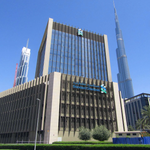
| Besides the obvious political suppression of the outgoing order, Libya’s future rulers must not forget that the Libyan uprising was caused partly by the total disregard by the outgoing regime for the needs and desires of its citizens.This disregard manifested itself in many forms, including the inequality of the distribution of wealth, the inequality of opportunity, and the glass ceilings to promotion to top positions reserved for the small incestuous ring of regime ultra loyalists.It also manifested itself in a military, police, tribal and family-run state, based on blatant nepotism, corruption and a lack of meritocracy.Moreover, the outgoing order was run by an isolated, insulated ruling elite looking after their own youth. They were totally cut off from political reality and the frustrations and expectations of most Libyans.Moreover, they were unwilling or unable to seriously satisfy the needs of Libya’s huge youthful population – which in Libya constitute the overwhelming majority of society.For example, the regime failed to provide affordable housing in sufficient volume to keep property prices realistic and affordable in line with prevailing wages.Nor did it provide sufficient or adequate (Islamic) loans or mortgages enabling the youth to afford probably the most expensive purchase in their lives. This acute housing shortage meant that too many youngsters were unable to get married leading to various social problems for both young Libyan men and women.There was also a failure to provide enough new job opportunities annually for the thousands of new university leavers. Too many graduates were left disillusioned without real academic or professional futures.This led to the inevitable feeling of loss of self worth as they were left idle, kicking their heels, often resorting to white-collar crime, drugs, alcohol and the general disregard for the rule of law.The irony is that like all the policy areas I have criticised this regime for – they recognsed these issues – such as youth issues – and made policy pronouncements towards them – but failed to seriously tackle them.The outgoing regime created youth organisations ostensibly to solve youth issues, but in reality it transpired all they were interested in was to harness the youth movement, to control it and exploit it for its political aims.The regime distributed a few token cars, loans and properties for propaganda purposes, but never genuinely tackled issues facing the youth – beyond numerous empty promises.In reality, because the old regime did not renew its legitimacy – de jure or de facto – through mass popular support but based it on the gun, the military, the security apparatus, the revolutionary guards, the tribe, the family and the individual – it did not bother with engaging with the mass public.Frankly, the old regime did not see the general public as a threat – a de facto threat – to its hold on power. It had held power for so long based on force and minority rule, it had taken the majority of the general public and its right to rule it for granted. It had continued to think that it could continue to suppress its populous by force – until it was too late.In any case, the regime’s idea of engagement over the decades was a down up system. It speaks, pronounces, makes policies and laws, and the mass public listens and implements these laws.The so-called popular and local committees, basic congresses etc of which I had attended a few – were a complete sham. There was absolutely nothing popular, representative or democratic about them. They were self-fulfilling stooges of the regime.This skewed relationship meant that the aging regime was long ago out of touch with reality and the needs of its youthful public. And with the passage of decades, the ruled got younger and went in one direction whilst the ruling elite got older, out of touch and went off in a tangent in another direction.Meanwhile, demographically, over the four decades whilst this oligarchic regime made up of out of touch, uninspiring, corrupt, yes-men and women, got older – Libya’s overwhelmingly population got younger.A younger population with fresh, visions, desires and aspirations had emerged. A generational gap had developed where the ruling elite were living in a past era – an out of date inapplicable paradigm.Libya’s new young generation expects a reasonable return in exchange for its social contract. That is, for agreeing to being passively ruled by the dictatorial, minority, aging, oligarchy, it expected that its modern aspirations are met.Unfortunately, these aspirations were not even understood by the old-aged, out of touch oligarchs. They for years assumed that if they provided subsidised basic foods, petrol, electricity, domestic gas etc, they could keep the masses happy.For decades, the regime practiced the old Soviet type policies of quantity rather than quality. They provided free but inferior education and health services. And for the first few decades of the regime’s life they were spot on, because it worked.However, as Libya’s GDP got higher, it led to high disposable incomes. The increasing and high rate of educated Libyans, including those with overseas educations was also a factor.This inevitably led to a growing middle class with new and raised expectations. These new imported expectations were also fed by the lifting of restrictions on satellite dish ownership in the early 90’s.The new plethora of Arab satellite TV stations that began in 1990’s gave Libyans a window on the outside world. Augmented by the lifting of travel restrictions on Libyans in the early 90’s, it meant that more and more working class Libyans were also travelling, not just the well off and connected.Later with the advent of internet, the world-wide web and mobile telephony – the world had truly become a permeable information village. No nation or people could be isolated from the rest of the world. The “Arab Spring” revolutions are a perfect example of that.Consequently, Libyans were now able to witness what was happening in neighbouring Egypt, Malta, Tunisia and particularly Dubai. Dubai is particularly pertinent in the Libyan psyche.Urban myth has it that its ruler visited Tripoli in the early 70’s and after a successful surgical operation pronounced upon leaving that his desire was one day for Dubai to be like Tripoli! Well the rest is history. Every Libyan knows in which direction Dubai went and in which direction Libya went after the late 70’s.Hence, the new generation wanted more than just subsidised pasta. Having come out of decades of socialist austerity, they now sought style, uniqueness, variety, quality and all that a capitalist free-market economy offered.Moreover, Libyans were now well aware of Libya’s oil income. They understood very well that Libya could now afford their desires and aspirations. Unlike Tunisia or Egypt, it was clear that it was a political and not an economic decision why Libya was not progressing in a Dubai-like trajectory.The new generation had seen how far Tunisia had developed with a limited GDP. Moreover, they had seen how far Dubai had leaped forward in the last few decades, whilst Libya slid backwards.In view of Libya’s amassing petro-dollar surpluses (US$150 billion net surplus according to the IMF), the new generation did not just want free health and education. It now wanted – in fact expect – a quality health and education service.Moreover, they want – and many could afford – an overseas health and education service. Libyans today want and expect more of and for themselves. They, moreover, want and expect more of their ruling class.They will no longer put up with second class, inefficient, lazy, corrupt, unrepresentative, insensitive oligarchies.I hope that a lesson from Libya’s history is learnt. The new Libyan ruling class – be it the current NTC or the new post-election de jure representatives – must not make the mistake again of ignoring the desires and aspirations of the majority of the Libyan public.They must never again take them for granted nor fail to regularly consult them. If they do, they may – and I hope they do – find themselves quickly and unceremoniously ejected out of office!Sami Zaptia – samizaptia@knowlibya.net |
Raised Expectations – Libya’s New Generation and Demographics – by Sami Zaptia


**Amin Ahmed** is a Libyan journalist and contributor at TripoliPost, reporting on current affairs, business, and regional developments. With a keen eye for detail and a dedication to fair, balanced journalism, he delivers stories that keep readers informed about Libya and the world beyond its borders. He can be reached at amin.ahmed@tripolipost.com
Leave a Comment