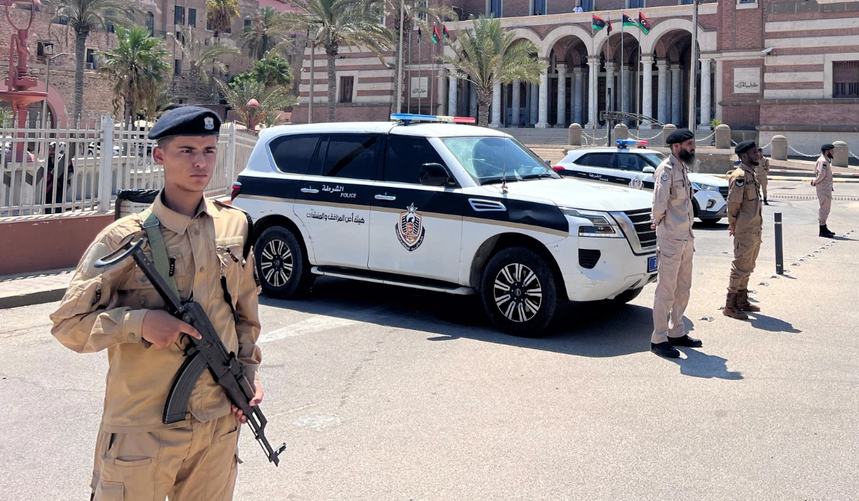
TRIPOLI: Authorities in western Libya have arrested five people, including foreign nationals, over a recent series of drone attacks targeting a major energy complex, the Tripoli-based government said on Sunday.
The detainees were allegedly part of a “sabotage cell” that authorities said was also planning attacks on a power station south of Tripoli and other critical infrastructure.
The government said the arrests had uncovered what it described as a “vast plot,” adding that the drone strikes appeared to be part of a coordinated campaign against strategic facilities.
More News: Iran Develops Supersonic Cruise Missiles with The Help Of Russia
The latest security operation follows a series of attacks on energy infrastructure in the country. Last month, a large petrol storage tank at an oil facility in Zawiya caught fire after a drone strike, according to Libya’s state-owned National Oil Corporation (NOC).
The facility forms part of Libya’s second-largest oil refinery, which has a refining capacity of about 120,000 barrels per day. The Zawiya complex is located around 45 kilometers (28 miles) west of Tripoli and has come under repeated drone attacks in recent weeks.
The NOC said another drone strike targeting fuel storage tanks outside Tripoli was thwarted on Thursday.
Authorities have not disclosed the identities or nationalities of those arrested, nor provided details on who they believe was behind the alleged sabotage network.
Libya News: The Western Power Grid in Libya is partially blacked out following major tripping of the transmission
The attacks raise fresh concerns over the vulnerability of Libya’s energy infrastructure, which remains central to the country’s economy and government revenues. Repeated disruptions could not only threaten fuel supplies but also deepen investor concerns over the security of operating energy facilities in a country still divided along political and military lines.
Libya holds Africa’s largest proven crude oil reserves, but its energy sector remains exposed to the consequences of years of political fragmentation and armed conflict following the 2011 overthrow of Muammar Qaddafi.
The country remains divided between two rival administrations: the United Nations-recognized government in Tripoli, led by Prime Minister Abdulhamid Dbeibah, and a rival administration in the east backed by military commander Khalifa Haftar.
The arrests and the alleged plans to target additional critical infrastructure underscore the broader security challenge facing Libya, where attacks on energy facilities can quickly become both an economic and political pressure point.