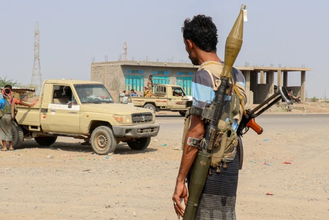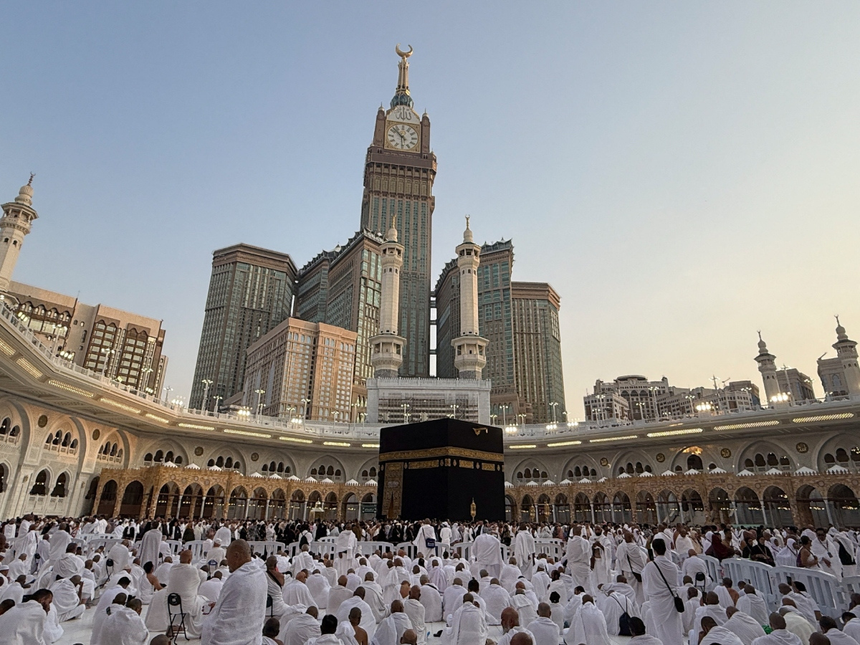
RIYADH, September 17, 2026: Condemnations have poured in following Saudi Arabia’s announcement that its air defences intercepted and destroyed a Houthi drone south of Mecca, with the Saudi-led coalition warning that the security of the Two Holy Mosques and pilgrims is a “red line.” The Houthis have denied targeting Mecca, calling the Saudi account false.
Saudi coalition spokesman Maj Gen Turki al-Maliki said the drone was intercepted on Tuesday evening before it entered the restricted airspace over Mecca. He described the incident as the second reported Houthi attempt to target the holy city, following a 2017 ballistic missile incident, and warned that the coalition would take necessary measures against further attacks.
More News: US Warns Americans Against Libya Travel Amid Kidnapping, Terrorism and Civil Unrest
The Houthis rejected the accusation. Hazam al-Assad, a member of the group’s political bureau, dismissed Riyadh’s claim as a “worn-out lie,” while a Houthi military source denied that there had been any threat from Yemen targeting Mecca or other Islamic holy sites.
The Organization of Islamic Cooperation condemned what it described as attacks on Mecca and the Medina region, saying such incidents violate the sanctity of Islamic holy sites and provoke Muslims around the world.
The Muslim World League also condemned the reported attacks, with its Secretary-General Sheikh Mohammed bin Abdulkarim Al-Issa denouncing what he described as Houthi attacks against holy sites, mosques and civilian targets.
In Pakistan, Chairman of the Council of Pakistani Scholars and Secretary-General of the World Council for the Glorification of the Two Holy Mosques, Sheikh Hafiz Muhammad Tahir Mahmood Ashrafi, strongly condemned the reported attacks and expressed solidarity with Saudi Arabia.
Ashrafi said the Houthi attacks had targeted or affected areas including Mecca, Medina, Riyadh, Khamis Mushait, Abha, Jizan, Najran, Taif and Yanbu. He also alleged that missile and drone attacks had caused civilian casualties and damage to homes, vehicles and industrial and petroleum facilities, while disrupting maritime traffic in the Red Sea, Bab al-Mandab Strait and Gulf of Aden.
Pakistan’s Prime Minister Shehbaz Sharif also condemned what he described as a Houthi attempt to target Mecca, calling it a “heinous and cowardly” act. He praised the Royal Saudi Armed Forces for what he described as their vigilance and rapid response.
Al-Azhar Al-Sharif separately condemned attacks against Saudi Arabia, describing them as a violation of the country’s sovereignty, security and stability and of principles of good Islamic neighbourliness.
The incident comes amid a sharp escalation in fighting between Saudi Arabia and the Houthis, with attacks reported against Saudi military and energy infrastructure as the conflict in Yemen has intensified. The Houthis have also claimed attacks on Saudi targets, including an air base and Aramco facilities, while Saudi forces have continued airstrikes against Houthi positions in Yemen.
The latest escalation also carries wider implications for Pakistan because Islamabad and Riyadh signed a Strategic Mutual Defense Agreement on September 17, 2025. The agreement states that aggression against either country would be considered aggression against both and was intended to strengthen defence cooperation and joint deterrence.
Pakistan’s Defence Minister Khawaja Asif said Islamabad would stand by Saudi Arabia “practically and diplomatically” if the conflict with the Houthis escalated further.
The renewed fighting has also raised concerns beyond the immediate Saudi-Yemen front. Houthi control and military activity around parts of Yemen’s Red Sea coast and the Bab al-Mandab Strait have increased pressure on key maritime and energy routes, while attacks on Saudi energy infrastructure have added to concerns over regional oil supplies.