WASHINGTON, September 17, 2026: US President Donald Trump has threatened to impose steep tariffs or restrict trade with the European Union if Brussels moves ahead with a proposal to make Canada the bloc’s first “associate member,” adding a new layer of tension to relations between Washington and Europe.
Trump made the remarks after European Commission President Ursula von der Leyen floated the proposal on the eve of Canadian Prime Minister Mark Carney’s scheduled address to the European Parliament in Strasbourg.
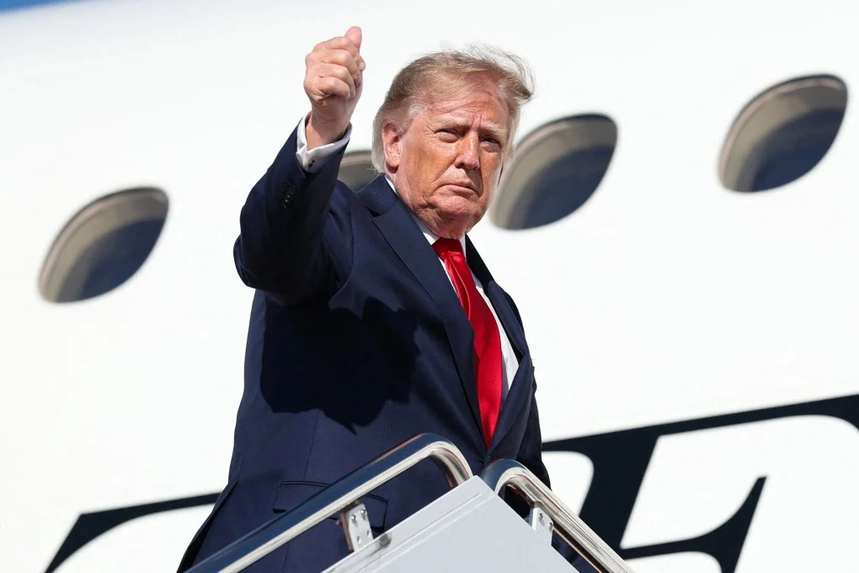
Commenting on the plan, Trump told reporters that it was “ridiculous” and warned that if the European Union proceeded and he considered the move hostile, his administration could respond with “very severe tariffs” or halt trade with Europe, according to Agence France-Presse.
Read More: Georgia, Serbia and Thailand Offer Simplified Travel Options for International Visitors
Von der Leyen proposed elevating Canada’s relationship with the European Union to what she described as the highest possible level, suggesting that Ottawa become the bloc’s first associate member.
“We want to take the relationship with Canada to the highest possible level,” von der Leyen told Carney. “I would therefore like to work with you to explore the possibility of Canada becoming the first associate member of the European Union.”
She also proposed that Canada participate in a future European security council that the EU is seeking to establish.
Carney is scheduled to become the first foreign head of government to address the European Parliament’s annual State of the Union debate when he speaks in Strasbourg on Thursday.
Canada and Europe Seek Closer Ties
Canada, which is engaged in a trade dispute with the United States under Trump, is seeking to strengthen relationships with other major economic partners. The European Union, meanwhile, has also faced growing tensions with Washington and is seeking to reinforce its partnerships as it navigates competition and strategic pressure involving both the United States and China.
Von der Leyen said Europe and Canada should build a common future across a range of areas, from artificial intelligence and climate change to the Arctic and geopolitics.
“We need to reshape our partnerships,” she said, calling for closer ties with Ottawa.
Carney’s office said Canada was seeking to deepen its relationships with “trusted partners” as the global environment becomes increasingly divided and uncertain.
Read More: Global Condemnation After Saudi Arabia Says Houthi Drone Targeted Mecca
Carney has previously spoken of establishing a “unique alliance” across the Atlantic, while European officials have emphasized the potential for expanded cooperation in strategic sectors.
The proposed status does not currently exist as a formal legal category under the EU treaties. Germany has recently suggested creating an associate membership arrangement for Ukraine that could allow Kyiv to attend some EU ministerial meetings or summits without voting rights.
German European Parliament member Tobias Kramer, a prominent supporter of a parliamentary resolution calling for closer EU-Canada cooperation, said the precise meaning of associate membership had yet to be determined. He nevertheless described closer cooperation between Canada and the EU as logical in principle.
Ottawa and Brussels are particularly interested in expanding cooperation in areas including artificial intelligence, energy and critical raw materials, as both face pressure from US tariffs and competition from China.
Trade Relations Have Expanded
Trade between the European Union and Canada has grown significantly since 2016 following the implementation of the Comprehensive Economic and Trade Agreement (CETA), which removed most tariffs on goods traded between the two sides.
Canada also became the first non-EU country to join the European Union’s SAFE defence procurement programme this year, further expanding cooperation in the security sector.
However, significant areas for deeper economic integration remain.
Canadian Ambassador to the EU Jonathan Wilkinson told AFP that Ottawa and Brussels were examining sectors where their capabilities and needs complement each other and where cooperation has strategic importance for maintaining economic and technological sovereignty.
These areas include energy, artificial intelligence and critical raw materials, particularly rare earth elements.
Canada is also seeking an agreement that would allow the European Investment Bank to finance Canadian projects involving strategic minerals, a move Ottawa says could help reduce dependence on China.
Another option under discussion is the full implementation of the EU-Canada free trade agreement. Ten EU member states, including France, Italy and Poland, have yet to ratify the deal, partly because of opposition from domestic farming groups.
The incomplete ratification has limited the agreement’s scope, leaving provisions covering investment protection and dispute settlement inactive.
The two sides are also discussing easing rules governing labour mobility and expanding student exchanges through the EU’s Erasmus programme.
In addition, Canada could potentially contribute to the EU’s €90 billion loan package for Ukraine through participation in defence projects benefiting Kyiv.
“We are really looking to go beyond simply having a free-trade relationship and deepen this relationship across all areas,” Wilkinson said.
Following his talks with von der Leyen, Carney travelled to London for his first meeting with British Prime Minister Andy Burnham, where the two leaders discussed opportunities to strengthen cooperation on artificial intelligence, defence and trade.
The developing Canada-EU relationship comes as both Ottawa and Brussels seek to diversify strategic and economic partnerships, while Trump’s tariff threats add uncertainty to transatlantic trade relations.