The International Monetary Fund, IMF’s Regional Economic Outlook for the Middle East and Central Asia, released November 11 in Dubai, projects growth in the Middle East and North Africa region at 5.1 percent in 2012, up from 3.3 percent in 2011. It reports that the Middle East and Central Asian region’s oil-exporting countries are expected to post solid growth in 2012, largely on account of Libya’s better-than-expected post-conflict recovery.
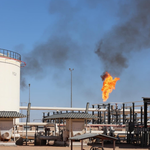
It says that Libya’s post-revolution recovery in hydrocarbon production has advanced faster than expected, reaching close to 90 percent of the pre-conflict level. Despite daunting challenges in the aftermath of the revolution, economic activity is recovering rapidly with the restoration of hydrocarbon production.
As of June 2012, total hydrocarbon output reached more than 1.52 million barrels per day, up from an average of 166,000 barrels per day during the conflict period in 2011, and is expected to increase to the pre-conflict level by 2013.
This faster-than-expected recovery has already given a momentous boost to Libya’s hydrocarbon exports and raised the budget and current account surpluses. Non-resource sectors of the economy have also seen a broad-based turnaround, led by public spending on reconstruction and the release of pent-up private demand.
As a result, real GDP is now projected to increase by a record-breaking 122 percent in 2012, after contracting by an estimated 60 percent in 2011. Predicated on an improvement in the security situation, economic growth is also expected to remain robust, at an estimated rate of 17 percent in 2013 and an average 7 percent per year in 2014–17.
The economic outlook remains favourable, but is subject to some downside risks. Most of the UN sanctions that had frozen the country’s foreign assets – a total of 200 percent of 2010 GDP – were lifted by the end of 2011, allowing the Central Bank of Libya to reaffirm the exchange rate peg, provide foreign exchange liquidity to banks, and help normalize banking operations.
Increased hydrocarbon revenues will lead to a fiscal surplus of 19 percent of GDP and increase the current account surplus to 22 percent of GDP in 2012.
The report goes on to say that the normalisation of imports and transaction costs is expected to lower consumer price inflation from an annual average of 16 percent in 2011 to 10 percent in 2012 and about 1 percent in 2013, despite the upward pressure on domestic prices arising from supply bottlenecks in housing and transportation.
Notwithstanding these favourable developments, intensifying strains in the global economy may exacerbate downside risks to growth, lowering petroleum prices and presenting additional challenges to Libya’s hydrocarbon-dependent economy.
The IMF says that at a historic juncture, the authorities in Libya face the challenges of stabilising the security situation, reducing political uncertainty, and responding to the aspirations of the revolution. Unlike other Arab countries in transition, Libya has no external financing need, thanks to its vast resource wealth.
Although Libya’s first elections in 60 years for the General National Congress, GNC, were a successful step toward political normalisation, the situation – with a fragmented political landscape and tribal rivalries – is likely to remain precarious, especially until the ratification of a constitution and parliamentary elections by mid-2013, the IMF report states.
The immediate challenges in promoting inclusive growth are to normalise the security situation, reduce political uncertainty during the transition stage, and exercise fiscal discipline while maintaining macroeconomic stability.
As a short-term response to the aspirations of the revolution, the interim government has raised wages and subsidies. Although Libya can afford elevated levels of current expenditures during a transitional period, the increase in wages and subsidies is eroding the country’s fiscal buffers and undermining prospects for fiscal sustainability.
Beyond the short term, however, the IMF says that Libya will need to address a wide spectrum of issues, including capacity-building and improving the quality of education, rebuilding infrastructure, developing its financial market, reducing hydrocarbon dependence, and putting in place an efficient social safety net.
The country will also need to establish a governance framework to improve transparency and accountability to better manage its resource wealth and help promote private sector–led economic development, the IMF says.
Libya’s Post-Conflict Recovery Better Than Expected, IMF Says


Abdullah Al Asadi is a Libyan journalist and writer at TripoliPost, covering politics, society, and culture across Libya and the wider region. With a passion for independent storytelling and a commitment to accuracy, he brings readers in-depth reporting and thoughtful analysis on the issues shaping his country. He can be reached at abdullah.asadi@tripolipost.com
Leave a Comment